
TV-L E13, Explained: What a PhD in Germany Actually Pays
July 31, 2026
Every week, a student forwards us a German PhD advert with the same question. The posting says "65% TV-L E13" and nothing else about money. Is that good? Can you live on it? Can you send money home?
German universities never explain this code, because every German applicant already knows it. So here it is in plain language — what TV-L E13 means, what actually lands in your account each month, and how to read a PhD advert like someone who grew up with the system.
First: it's a salary, not a scholarship
TV-L stands for Tarifvertrag der Länder — the collective pay agreement covering public employees of Germany's federal states. University staff are public employees, and that includes doctoral researchers with an employment contract. E13 is the pay grade within that agreement for jobs that require a master's degree. Which is exactly what a PhD position is.
This is the detail most Indian students miss at first: when a German university hires you for a PhD, your salary is not negotiated, decided by your professor, or dependent on your nationality. It is read off a public table that trade unions negotiated on your behalf. You can look up the exact number before you even apply — try that with any private-sector job offer.
The table also has experience steps, called Stufen. You start at Stufe 1, move to Stufe 2 after your first year, and keep climbing. Your salary rises automatically during the PhD without you asking anyone.
The percentage is the number that matters
German PhD positions are advertised at a percentage: 50%, 65%, 75%, or 100% of a full position. On paper this is your contracted working time. In practice, nearly every PhD student works on their research full-time regardless — the percentage mainly decides your pay.
The percentage follows field conventions more than logic. Computer science and engineering positions are usually 100%, because those departments compete with industry salaries. Physics, chemistry and life sciences often sit at 65–67%. Humanities and social sciences frequently offer 50%. Same degree at the end, very different bank balance along the way.
So when you scan an advert, find the percentage before you find the professor's name. "3 years at 100% TV-L E13" and "2 years at 50%, extension possible" are not the same offer, even if the research topic is identical.
What the 2026 numbers look like
| Contract | Gross per month | Net per month (approx.) | In rupees (approx.) |
|---|---|---|---|
| 50% E13 | ~€2,315 | ~€1,550 | ~₹1.5 lakh |
| 65% E13 | ~€3,010 | ~€1,950 | ~₹1.9 lakh |
| 75% E13 | ~€3,470 | ~€2,200 | ~₹2.2 lakh |
| 100% E13 | ~€4,630 | ~€2,750 | ~₹2.7 lakh |
Based on Stufe 1 of the 2026 pay table, tax class I, no church tax. Your exact net varies a little by state and insurer, but this is the honest ballpark — and it rises every year you stay.
Where the gross-to-net gap goes (it's not lost money)
Yes, roughly 40% disappears between gross and net. But look at what it buys before you grieve. Full public health insurance — no separate health surcharge like the UK charges international students. Pension contributions — and if you leave the EU after your PhD, you can typically claim back your own pension payments about two years after departing, which for many of our students has meant a five-figure-euro refund. Plus unemployment insurance and paid vacation, usually around 30 days.
This is also the fair way to compare a contract against a scholarship. A DAAD-type stipend of €1,200–1,400 is tax-free, and for shorter projects that simplicity is attractive. But the employment contract brings insurance, pension and job protections a stipend never will. Given the choice, we usually advise our students to take the contract.
Can you actually save?
Student living costs in most German university cities run €1,000–1,200 a month including rent — Munich, Frankfurt and Hamburg cost more, smaller cities like Aachen, Dresden or Karlsruhe less. On a 65% contract that leaves €600–800 a month over; on 100%, considerably more than many entry-level salaries in India, after living well in Europe.
This is why we keep saying the fully-funded route changes a family's finances, not just a student's CV. It is normal — not exceptional — for our students in Germany to support parents or clear old education loans during the PhD itself.
Reading an advert like an insider
Three things to check in every German PhD posting. One: percentage and grade, which you can now decode. Two: duration and extension terms — "3 years, extension to 4 possible" is standard and safe; "1 year initially" deserves a polite question about what happens after. Three: the funding source. A position funded by a DFG project or an industry partnership is budgeted for the whole project; a position a professor is "still securing funding for" is a promise, not a contract. Ask precisely, in writing.
If you want the full picture of how German PhD admissions work — who is eligible, how supervisor outreach actually gets replies, timelines and the visa — we've put everything in our complete guide to a fully-funded PhD in Germany. And if you want to know whether your profile is competitive before you invest months into applications, our free eligibility check scores you against the same criteria German professors use.
EduSail specializes in exactly one thing: getting Indian students into fully-funded PhD positions abroad. For Germany, that means finding chairs with real budgets and writing outreach professors answer.
No fees until you're admitted. That's the model.
The one-line takeaway
TV-L E13 isn't jargon — it's a public salary table you can check yourself. The grade tells you it's master's-level work; the percentage tells you what you'll earn; the Stufen guarantee it grows. Once you read adverts this way, you'll never look at a "fully funded PhD" claim the same again.
Related Articles

Choosing between a funded and a self-funded program isn't just about tuition. It's a choice between starting your career with financial freedom or a mountain of debt. Let's break down why a funded program is a strategic investment in your future.
It’s not just a degree — it’s a transformation. Explore the psychological shifts that happen when you study abroad.
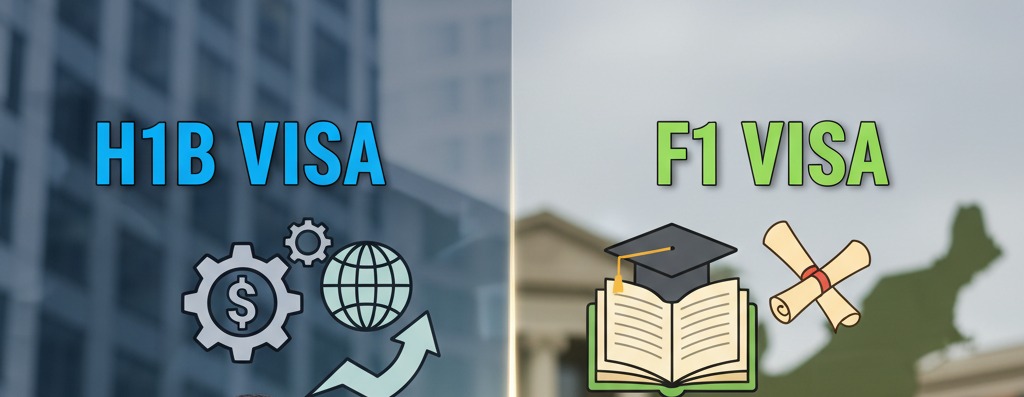
Understand the critical differences between F-1 and H1B visas and why the F-1 pathway is the most stable and strategic choice for your future in the US.